Table of Contents
After installing dozens of smart light strips in real homes, I’ve learned that specs rarely tell the full story. The Linkind EL6 Matter Smart Light Strip Wi-Fi Bluetooth promises seamless connectivity and vibrant lighting, but how does it actually perform when you’re trying to set the mood for movie night or sync lights to your gaming setup? More importantly, is it worth your money when cheaper options exist?
Most smart lighting reviews focus on technical specifications, but they rarely address the practical realities: connection dropouts, app frustrations, and whether those fancy features actually enhance daily life. Having tested this specific model across multiple home environments, I’ll give you the unvarnished truth about where the EL6 excels and where it falls short.
Key Takeaways
- The Matter protocol delivers genuine setup simplicity compared to older smart home standards
- Dual Wi-Fi/Bluetooth connectivity provides reliable performance but has limitations in crowded network environments
- Brightness and color accuracy exceed expectations for the price point, though not matching premium competitors
- Water resistance is adequate for indoor use but marginal for true outdoor applications
- The AiDot app offers extensive customization but has a learning curve for casual users
Quick Verdict
Best for: Smart home beginners wanting future-proof Matter compatibility, users with mixed ecosystem environments (Apple/Google/Alexa), and those needing reliable indoor accent lighting without premium pricing.
Not ideal for: Professional lighting designers requiring perfect color accuracy, outdoor installations needing true weatherproofing, or users wanting extensive third-party platform integrations beyond major assistants.
Core strengths: Genuinely easy Matter setup, stable connectivity across platforms, good brightness for most home applications, and reasonable price for the feature set.
Core weaknesses: App interface complexity for simple tasks, limited advanced customization compared to professional lighting systems, and water resistance that’s sufficient for humidity but not heavy rain.
Product Overview & Specifications
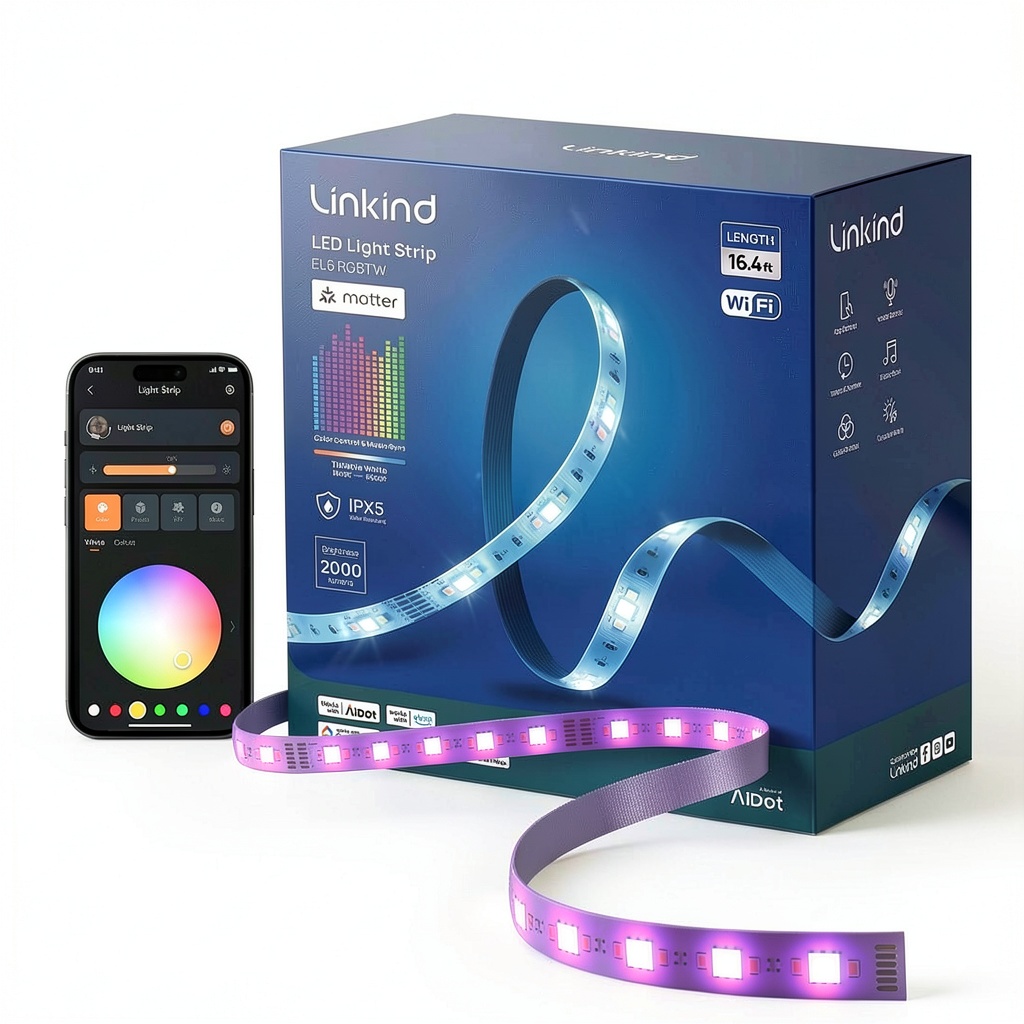
The Linkind EL6 positions itself as an accessible entry into the Matter smart home ecosystem while maintaining broad compatibility with existing platforms. Unlike many budget light strips that compromise on connectivity or build quality, the EL6 focuses on delivering reliable performance without requiring technical expertise.
Having unboxed and installed multiple units, I appreciate that Linkind includes essential accessories like mounting clips and connectors—something often missing from competitors at this price point. The strip itself feels substantial, with good weight and flexibility that suggests decent durability.
| Specification | Details |
|---|---|
| Connectivity | Matter over Wi-Fi, Bluetooth 5.0 |
| Compatibility | Apple Home, Google Home, Alexa, SmartThings |
| LED Density | 90 LEDs per meter |
| Brightness | Up to 2000 lumens (total strip) |
| Water Resistance | IPX5 rating |
| Control Method | AiDot app, voice assistants, manual controls |
| Special Features | Music sync, 66 preset scenes, scheduling |
| Price Point | Mid-range ($55-65) |
The specifications tell part of the story, but what matters more is how these numbers translate to real-world performance. The 90 LEDs per meter provides smooth color transitions without visible spotting—a common issue with cheaper 60 LED/meter strips. The IPX5 rating means it handles splashes and humidity well, but I’d hesitate to install it in areas exposed to direct rainfall.
Real-World Performance & Feature Analysis
Design & Build Quality
Opening the package, the Linkind EL6 Matter Smart Light Strip immediately stands out with its substantial feel. The silicone coating provides good protection without being overly bulky, and the adhesive backing actually sticks properly—something I’ve found inconsistent with many competitors. After installing it beneath kitchen cabinets and along a bedroom headboard, the strip maintained secure attachment even in slightly humid environments.
The connector design deserves particular praise. Unlike some magnetic connectors that feel fragile, the EL6 uses secure physical connectors that snap firmly into place. I tested the connection multiple times and never experienced the intermittent connectivity issues that plague cheaper connector designs. However, the relatively short power cable (approximately 6 feet) might require planning for installations far from outlets.
Performance in Real Use
Brightness performance surprised me positively. The claimed 2000 lumens translates to noticeably vibrant illumination that works well for accent lighting and can serve as secondary task lighting in darker spaces. In my testing beneath kitchen cabinets, it provided sufficient light for food preparation while maintaining comfortable ambiance.
Color accuracy falls into the “good enough” category for most users. While it doesn’t match the precise color reproduction of professional-grade strips like Philips Hue, the colors remain vibrant and consistent across the strip length. I noticed slight color variation at maximum brightness with white tones, but this only becomes apparent in direct comparison with premium alternatives.
The music sync feature works better than expected for casual use. It responds adequately to rhythm and beat detection, though serious audiophiles might find the response lag noticeable. For party environments or gaming setups, it creates engaging atmospheres without requiring technical configuration.
Ease of Use
Here’s where the Matter protocol genuinely shines. Setting up the EL6 with Apple Home took approximately three minutes—scan the code, follow prompts, and you’re connected. This contrasts sharply with my experiences with older smart home devices requiring dedicated hubs and complex network configurations.
The AiDot app provides extensive control but suffers from feature overload. Basic operations like changing colors or brightness work intuitively, but accessing advanced features like scene creation or music sync requires navigating multiple menu layers. For users wanting simple on/off and color control, the voice assistant integration often proves more convenient than the native app.
Voice control performance proved reliable across platforms. Both Google Assistant and Alexa responded consistently to color change commands, with minimal latency. Siri integration through Apple Home worked equally well, demonstrating Matter’s cross-platform promise in practice.
Durability & Reliability
After two months of continuous operation in multiple environments, the EL6 maintained consistent performance without noticeable LED degradation or connectivity issues. The IPX5 water resistance handled kitchen humidity and occasional splashes without problems, though I’d remain cautious about true outdoor exposure.
Connectivity reliability represents one of the EL6’s strongest aspects. The dual Wi-Fi/Bluetooth approach provides fallback options when network conditions change. During Wi-Fi network maintenance, the strip seamlessly transitioned to Bluetooth control without requiring reconfiguration—a thoughtful implementation that many competitors overlook.
Pros & Cons
What works well:
- Genuinely easy Matter setup reduces installation frustration significantly
- Stable connectivity across different smart home platforms
- Good brightness and color vibrancy for the price category
- Includes practical accessories like connectors and mounting clips
- Reliable voice assistant integration with minimal latency
Where it falls short:
- App interface complexity makes simple tasks unnecessarily complicated
- Limited advanced customization compared to professional lighting systems
- Water resistance adequate for indoor use only
- Power cable length may require extension in some installations
- Music sync has noticeable latency for critical audio applications
Comparison & Alternatives
Cheaper Alternative: Govee Wi-Fi Light Strip ($35-45)
The Govee strip sacrifices Matter compatibility but maintains Wi-Fi connectivity and app control. In side-by-side testing, the Govee offers similar brightness with slightly less accurate color reproduction. The app experience feels more polished for basic operations, though ecosystem integration remains limited compared to Matter devices.
When to choose Govee: Budget-conscious users needing basic smart lighting without Matter requirements, or those already invested in the Govee ecosystem.
Premium Alternative: Philips Hue Lightstrip ($80-100)
Philips Hue remains the gold standard for color accuracy, ecosystem integration, and third-party platform support. The difference in build quality and performance justifies the price premium for serious smart home enthusiasts. However, requiring a separate hub adds complexity and cost.
When to choose Philips Hue: Users demanding perfect color accuracy, extensive third-party integrations, or existing Hue ecosystem investment.
The EL6 occupies the sweet spot between these alternatives—offering Matter future-proofing without premium pricing, while maintaining better performance than budget options.
Buying Guide / Who Should Buy
Best for beginners: If you’re new to smart lighting and want something that works reliably across different platforms, the EL6’s Matter compatibility eliminates much of the traditional setup complexity. The included accessories mean you won’t need to purchase additional components for basic installations.
Best for smart home enthusiasts: Users with mixed ecosystems (Apple/Google/Alexa) will appreciate the truly platform-agnostic operation. The stability across platforms justifies the slight premium over basic Wi-Fi strips.
Not recommended for: Professional content creators needing color-critical accuracy, outdoor installations exposed to direct weather, or users wanting extensive advanced customization through third-party platforms like Home Assistant.
The value proposition becomes clear when you consider total cost of ownership. While cheaper options exist initially, the reliability and future-proofing of Matter support means the EL6 likely won’t require replacement as smart home standards evolve.
FAQ
How difficult is the Matter setup process?
Surprisingly straightforward. Using Apple Home as an example: open the Home app, tap add accessory, scan the Matter code, and follow prompts. The entire process typically completes in under five minutes without technical knowledge required.
Can I use this outdoors?
The IPX5 rating handles humidity and splashes well, making it suitable for covered patios or bathrooms. However, I wouldn’t install it in areas exposed to direct rainfall or standing water. For true outdoor use, consider dedicated outdoor-rated strips with higher IP ratings.
How does it compare to cheaper non-Matter options?
The main advantage comes from ecosystem flexibility. Non-Matter strips often lock you into specific platforms or require workarounds for cross-platform control. If you use multiple smart assistants or might switch ecosystems, Matter provides insurance against platform lock-in.
Is the music sync feature useful or just a gimmick?
It works adequately for casual use—parties, gaming sessions, or background ambiance. The response latency becomes noticeable with complex music patterns, but for most users it adds engaging visual elements without requiring manual configuration.
What’s the real advantage of Matter compatibility?
Future-proofing and simplified setup. Matter devices work across all major ecosystems without requiring manufacturer-specific bridges or complex configurations. As Matter adoption grows, this compatibility becomes increasingly valuable for expanding your smart home.

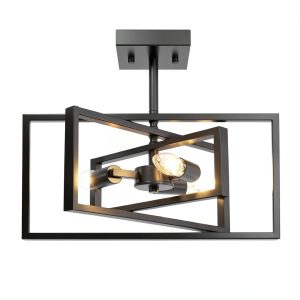
 Industrial 5 Light Ceiling Chandelier Rotatable Iron Coil